
AI Agents in Web Development: How the Site-Building Process Is Changing in 2026
Why AI agents have become the development standard, what they actually automate, and what businesses without an in-house dev team should watch for.

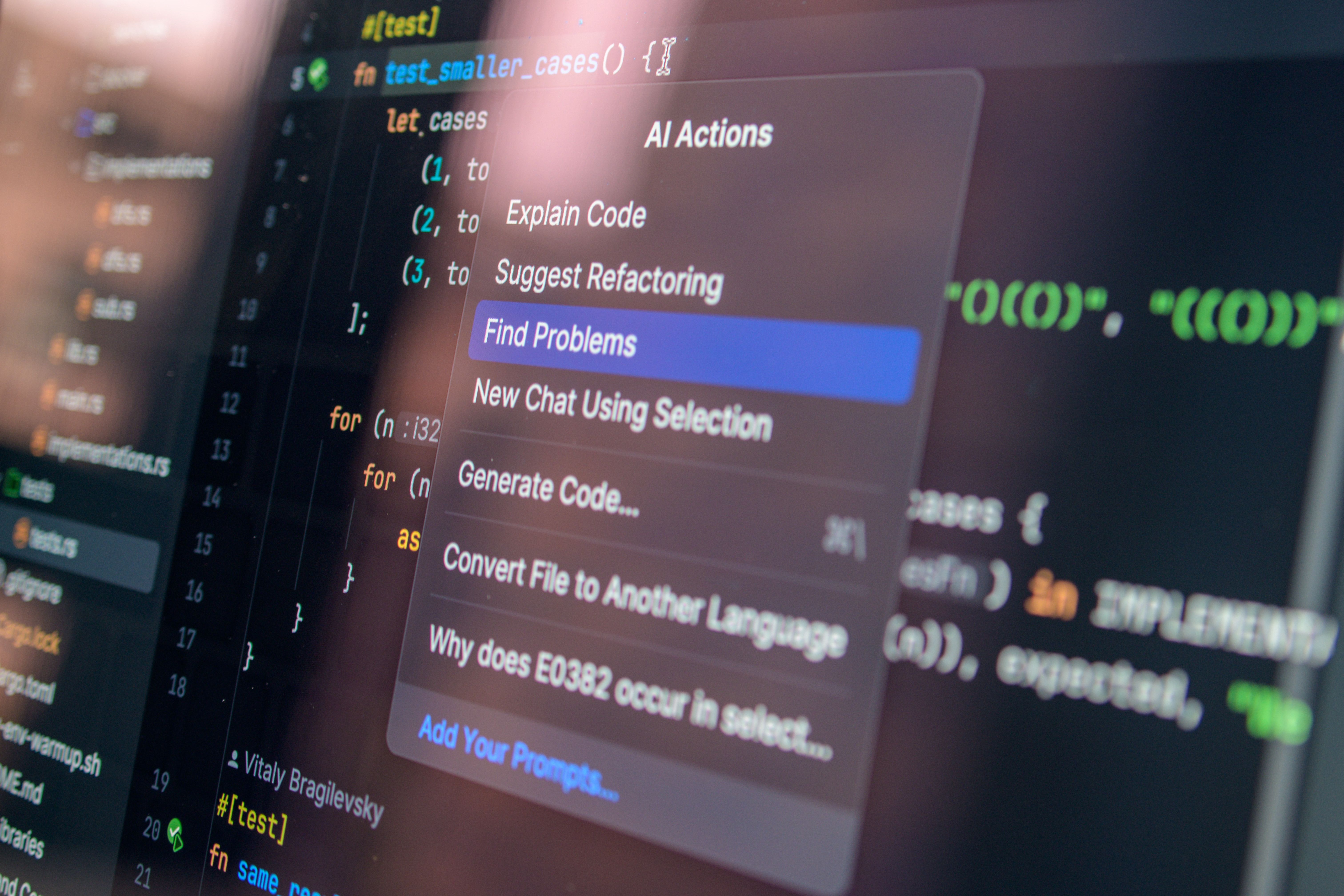
Over the past year, a developer's day-to-day work has changed noticeably. It's not about another framework or library — the process itself has changed: AI agents have stopped being an experiment and become part of the everyday development cycle. According to industry surveys, around 90% of developers worldwide now use agents in their workflows, not just autocomplete.
What changed compared to autocomplete
Older tools suggested the next line of code. Agents work differently: they receive a task in natural language, read the codebase themselves, make changes across multiple files at once, run tests, and iterate until the result works. A developer goes from someone who types code to someone who sets the task and reviews the result.
The practical model that has already taken hold: AI builds the initial scaffold of a solution, and the developer refines and extends it to fit specific business requirements. This doesn't replace the specialist — it changes where they spend their time. Agents handle routine parts (CRUD, standard forms, basic API integration) faster than a human. Architectural decisions, edge cases, and understanding the client's business logic still remain the developer's job.
Where this is already working in practice
Scaffolding and migrations. Porting components between framework versions, bulk syntax updates, generating standard CRUD modules — tasks where an agent saves hours of routine work rather than creating architecture from scratch.
Code review and testing. Agents are good at catching obvious bugs, convention violations, and missing error handling — things that used to eat up a senior developer's time reviewing junior colleagues' work.
Documentation and technical support. For projects combining a backend with a CMS/CRM — relevant for integrations like Bitrix24 — an agent can keep documentation in sync with the code, something that was almost never done manually before due to lack of time.
Working with legacy code. Understanding an old codebase without documentation is one task where an agent with access to the whole repository handles things faster than a developer seeing the project for the first time.
The flip side: accountability and data quality
The industry is already going through a second wave — from "let's try AI everywhere" to "can we actually trust it." Teams call the key 2026 trend a shift from exploration to accountability: what matters is how accurate and safe the data behind the models is, whether data privacy is respected, and whether the models put into production are transparent.
For web projects, this translates into concrete things:
Agent-generated code still needs review — especially anywhere dealing with money, personal data, or access rights.
You can't give an agent unrestricted access to a production environment or live database without limits and logging.
AI-driven personalization of interfaces (content selection, recommendations, page structure per user) requires the same care with personal data as any other system handling PII.
What this means for sites without an in-house dev team
For SMB businesses without their own development team, the trend cuts both ways.
On one hand, building standard modules — client portals, catalogs, CRM integrations — has gotten cheaper and faster because contractors spend fewer hours on routine work. On the other hand, client expectations have risen: load speed, accessibility, and personalization are no longer "optional" — they're baseline requirements, and competitors already using these tools win on both timeline and price.
The practical takeaway for a site or online store owner: when choosing a contractor, don't ask "do you use AI" — ask how the review process for AI-generated output is actually organized, because result quality is determined by who controls the tool, not by the tool itself.
Bottom line
AI agents haven't eliminated the developer's role — they've changed how time is distributed within it. Less routine, more architectural decisions, more accountability for the outcome. For businesses, this means faster, more affordable projects, but it also requires a bit more care in choosing a contractor: what matters isn't how fast code gets generated, but the quality of the final product and who's accountable for it.
Lead full-stack web developer and Bitrix24 service integrator at Red Button.
Related reading
 215
215Web Development Trends 2026: What Your Business Website Actually Needs
AI built into the interface, headless architecture, and load speed as a ranking factor — we break down which 2026 web development trends actually matter for business and which you can safely skip.
Tell us about your task — we'll propose a solution
Free consultation: we'll analyze processes, select a license and estimate implementation for your business.